Delivery Truck Accident Settlement Calculator: Los Angeles
Delivery truck accident settlements in Los Angeles typically range from $10,000 for minor injuries to $300,000+ for severe cases. The key factors are fault determination under California's pure comparative negligence rule, injury severity, medical documentation, lost wages, and the driver's employment status—whether they worked for an Amazon DSP, UPS (Teamsters), FedEx Ground (contractors), or USPS (federal employees). Each employment relationship carries different liability chains. Most cases settle between $25,000 and $150,000. Your range depends on insurance coverage, quality of negligence evidence, and whether you have route-pressure documentation showing systemic driver pressure. Los Angeles juries expect solid evidence; they award fairly but won't inflate weak claims.
Talk to an attorney who handles Amazon, UPS, and FedEx accidents.
Start my review →What factors determine your settlement
Settlement amounts aren't random. They track a predictable set of factors that juries and insurance companies evaluate:
- Comparative fault. California is a pure comparative negligence state. If you were 30% at fault, you recover 70% of damages. If you were 60% at fault, you get 40%. No fault threshold—you can always recover something.
- Injury severity and medical records. The stronger your medical documentation, the higher the valuation. A clear timeline from emergency-room visit to imaging to ongoing treatment multiplies your recovery.
- Lost wages and earning capacity. If the crash kept you out of work, that's a direct damage component. If it affected your long-term earning power, that multiplies the award.
- Driver employment status. This is critical. An Amazon DSP driver is a contractor, not an employee—but Amazon can still be liable under vicarious liability rules if the driver was on an Amazon route using the Rabbit app. UPS Teamsters are union employees, making the employer directly liable. FedEx Ground drivers are independent contractors; liability falls on the contractor company and sometimes FedEx (depending on control). USPS drivers are federal employees, triggering Federal Tort Claims Act rules and different caps.
- Evidence of route pressure. Screenshots of driver communications, Rabbit app quotas, time-per-stop requirements, or proof the driver was behind quota and rushing—these are gold in a DSP case. They support negligence and liability up the chain.
- Insurance coverage limits. A DSP might carry $250K liability; a large carrier might have $1M+ umbrella coverage. Your recovery is capped at the policy limit unless you pierce the corporate veil.
- Comparable case precedent. LA juries have awarded consistently in the $50K-$200K range for moderate delivery-truck injuries. Severe spinal or brain injuries push higher.
- Willingness to go to trial. Insurance companies know your BATNA (best alternative to negotiated agreement). If you're credible trial material and the defendant knows it, they settle higher.
Typical settlement ranges by injury severity
These ranges reflect Los Angeles County jury behavior and comparable case outcomes over the last three years. They assume fault is clear or significantly defendant's side.
Minor injuries ($5,000–$25,000)
- Soft-tissue injuries: whiplash, minor strains, contusions
- Medical treatment: ER visit, 2–3 chiropractic visits, no ongoing care
- Recovery: 4–8 weeks, full function restored
Moderate injuries ($25,000–$100,000)
- Fractures, significant sprains, muscle tears, minor joint injuries
- Medical treatment: ER + 2–4 weeks of PT, possible short-term anti-inflammatories
- Time off work: 2–6 weeks
- Lingering symptoms: occasional pain or limited range of motion
Severe injuries ($100,000–$500,000+)
- Spinal injury (bulging/herniated disc requiring injection or surgery), significant head trauma, fractures requiring surgery, substantial scarring
- Medical treatment: ER, imaging (CT/MRI), possible surgery, 8+ weeks PT, ongoing pain management
- Time off work: 2–3 months minimum; potential permanent partial disability
- Long-term effects: chronic pain, reduced earning capacity, future medical needs
Catastrophic injuries and wrongful death ($500,000+)
- Spinal cord injury (partial or complete paralysis), traumatic brain injury with cognitive deficits, amputation, multiple organ failure, death
- Lifelong care, lost earning potential, pain and suffering at the maximum
Los Angeles and California-specific settlement factors
California law and Los Angeles court culture shape your recovery in specific ways.
Pure comparative negligence. California doesn't follow a 50% bar—you can be 99% at fault and still recover 1% of your damages. This cuts both ways: you might recover even in a partial-fault scenario, but the defendant argues your percentage down aggressively.
Two-year statute of limitations. California Civil Code § 335.1 gives you two years from the injury date to file suit. Miss that deadline and your claim is dead, no matter how strong it is. Don't delay.
Los Angeles County juries. LA juries are experienced with delivery-truck cases (high volume of claims) and tend to award fairly for clear negligence but expect solid medical and economic evidence. Speculative damages get cut.
DSP prevalence in LA. Amazon operates dozens of DSPs across the LA metro area. DSP liability cases often turn on route-pressure evidence and the question of whether Amazon exerted sufficient control over the driver's decisions to trigger vicarious liability. This is an emerging area; LA courts are still clarifying the standard.
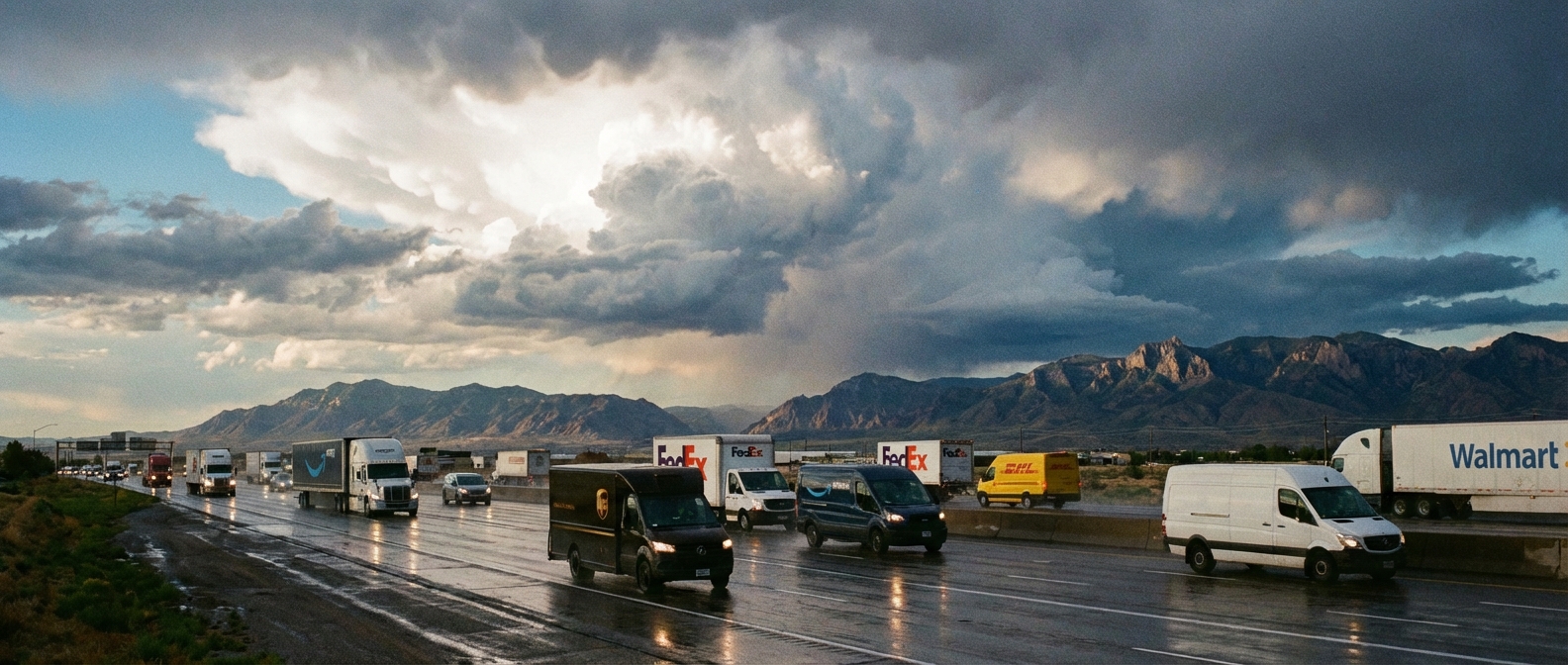
I-405 and I-10 crash corridors. The I-405 and I-10 are primary delivery routes in LA. Accidents there are common, and juries know it. Proving the truck driver caused the crash (rather than freeway congestion) requires clear evidence—dashcam footage, witness testimony, or police accident report findings.
Insurance landscape. Large national carriers (Amazon logistics, UPS) have strong insurance programs. Smaller DSPs and local contractors often carry minimum liability. If you're hit by a small DSP, your recovery may be capped at California's minimum ($15,000 per person, $30,000 per accident for liability) unless they carried higher limits.
When a calculator isn't enough
Settlement calculators work for straightforward injury cases. But some delivery-truck accidents require litigation because damages exceed simple math:
Wrongful death. If the crash killed a family member, loss of life doesn't have a formula. Juries consider the decedent's age, earning potential, dependents, and society's loss. These cases regularly exceed $500,000 in California.
Permanent disability or disfigurement. A crash that leaves you with chronic pain, reduced mobility, or visible scarring is worth far more than the medical bills alone. Juries award for future pain, lost quality of life, and reduced earning capacity—often doubling or tripling economic damages.
Multiple defendants. When an Amazon truck hits you, the liability question is: driver alone, the DSP, Amazon, or all three? Naming multiple defendants and proving the chain of negligence (Amazon pressured the DSP, the DSP pressured the driver, the driver hit you) requires discovery and expert testimony. Multiple insurance policies mean larger recovery.
Insurance coverage disputes. If the DSP was underinsured or the claim exceeds policy limits, you might pursue the driver personally or pierce the corporate veil to reach parent company assets. These disputes push cases into litigation.
Federal Tort Claims Act (USPS cases). If you were hit by a USPS vehicle, you can't sue USPS directly—you have to file an administrative claim with the USPS Office of Inspector General first. If USPS denies it, only then can you sue. The process is slower and liability caps are different.
Comparative negligence pushback. If the defendant argues you were significantly at fault, and you disagree, trial resolves it. Calculators assume you're mostly right; trial determines actual percentages.
Frequently asked questions
Do I have a case if I was partly at fault?
Yes. California is a pure comparative negligence state. Even if you were 50% at fault, you can recover 50% of your damages. The bar for filing suit is low; the question is how much you recover.
Does it matter if it was an Amazon DSP, UPS, FedEx, or USPS truck?
Absolutely. Amazon DSP drivers are contractors; liability may involve the DSP and Amazon under vicarious liability rules. UPS drivers are Teamsters (union employees), so the employer is directly liable. FedEx Ground drivers are independent contractors, with liability on the contractor and sometimes FedEx. USPS drivers are federal employees, triggering Federal Tort Claims Act rules and different procedures. Know what hit you—it changes the case.
How long does a delivery truck accident case take?
Most settle within 6–12 months after demand. If you go to trial, expect 12–24 months from filing to verdict. USPS cases take longer because of the administrative claim requirement. Don't sign anything for six months minimum while you gather medical records and build the case.
What if I was hit from behind on the freeway?
Rear-end collisions are presumptively the rear driver's fault in California. The truck driver should have maintained a safe distance. However, if another vehicle suddenly cut into the truck's lane without warning, comparative negligence can apply. Either way, you have a strong liability position.
Can I claim punitive damages in California?
Only if the defendant acted with malice, fraud, or oppression. A negligent driver hitting you is not enough. Punitive damages are rare in routine delivery-truck cases. Focus on compensatory damages (medical, lost wages, pain and suffering).
Should I settle or go to trial?
If the settlement offer matches your expected value (injury severity, comparable cases, jury trends in LA County), take it. Going to trial is expensive, slow, and unpredictable. Only go to trial if the offer is unreasonably low or liability is strong and the defendant won't budge.
Tom Reeves has analyzed delivery truck crash patterns for Amazon, UPS, FedEx, and last-mile carriers for 7 years. He is not an attorney and does not provide legal advice.